


National Agri-Infrastructure Framework (RHIDF)
– Agriculture & Food Security
A scalable blueprint linking irrigation, storage, training, and market connectivity, designed to crowd in finance and deliver measurable, state-level impact.
Role
Component lead/advisor (Agriculture & Food Security).
Scope
Multi-year program architecture across zones; pilots → national scale.
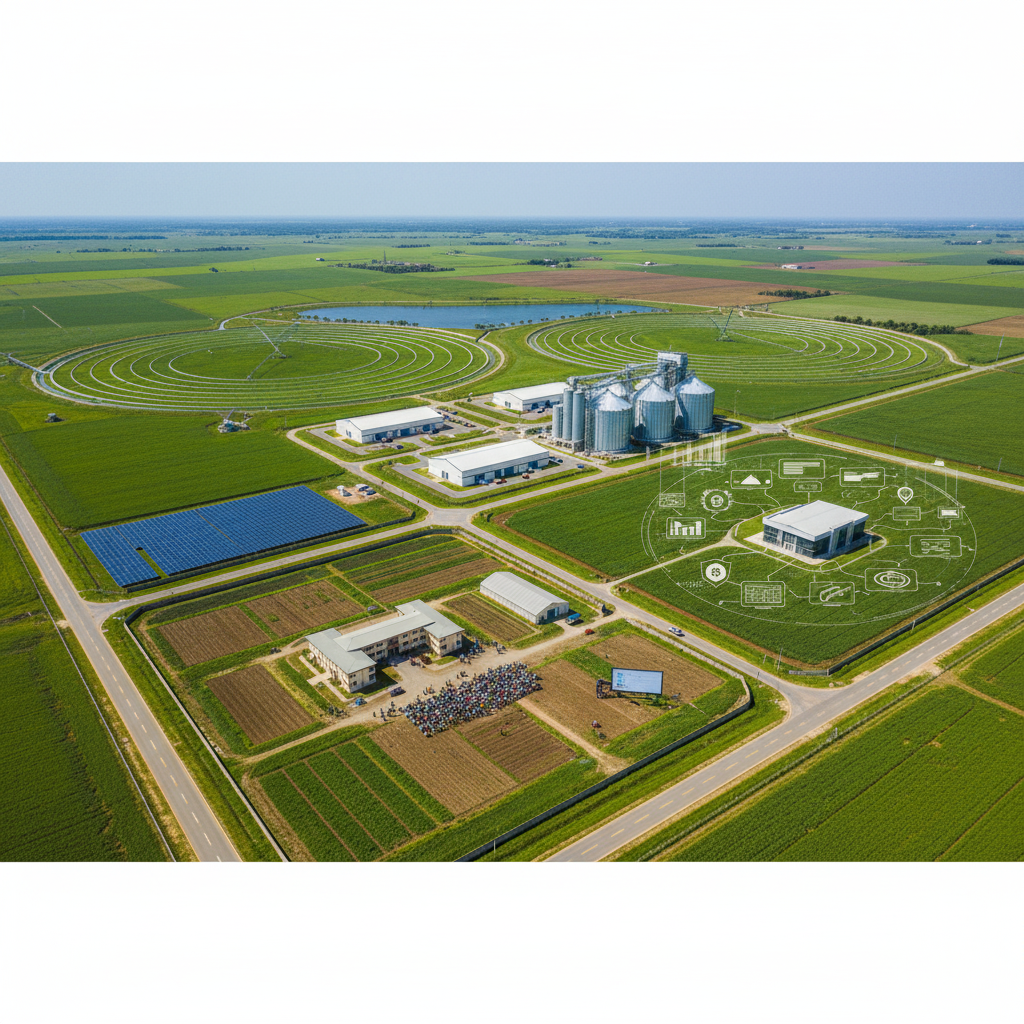
Pillars
Mechanized land prep, irrigation networks, solar drying & cold chain, warehouses, training, market linkages, M&E.
Challenge
Fragmented interventions and ad-hoc procurement produced short-lived gains without durable supply-chain infrastructure or finance alignment.
Selected Outcomes
- Create a blueprint for an integrated agriculture system for Nigeria involving relevant agencies.
- Increase irrigated land by 500,000 hectares over a period of 4 years.
- Reduce waste by 40%, and increase food security by 45%.
What made it different
A practical, financing-ready blueprint with standard components (irrigation, storage, energy, training) and an accountability-first M&E spine.
Approach
1. Diagnostic & Targeting:
Agro-ecological zoning, crop-market fit, state readiness scoring.
2. Program Design:
Pillar budgets, phasing, governance, BoQ archetypes, and procurement standards.
3. Finance & Incentives:
Co-funding with DFIs/banks, matching grants, outcome-based disbursement, input credit design.
4. People & Capability:
State PMUs, extension toolkits, operator training, youth/women pathways.
5. M&E & Data:
KPIs, baseline templates, digital MIS for activity → output → outcome tracking.
6. Pilot to Scale:
Rapid pilots with clear “go/no-go” criteria before state-level rollout.